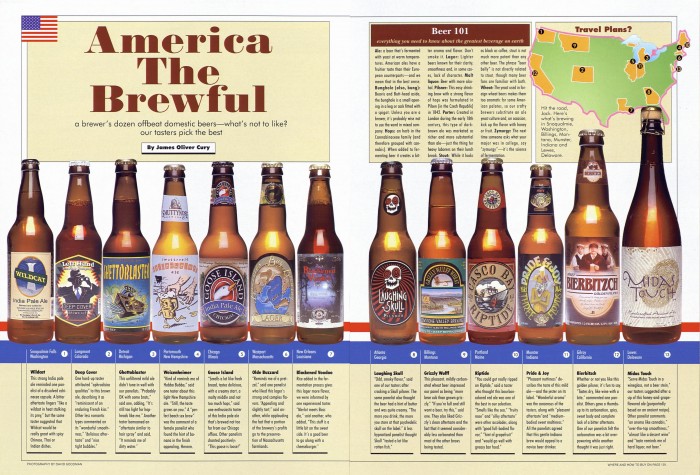
America The Brewful
July, 2003
Beer 101
everything you need to know about the greatest beverage on earth
Ale: a beer that's fermented with yeast at warm temperatures. American ales have a fruitier taste than their European counterparts—and we mean that in the best sense. Bunghole (also, bung): Beavis and Butt-head aside, the bunghole is a small opening in a keg or cask fitted with a spigot. Unless you are a brewer, it's probably wise not to use the word in mixed company. Hops: an herb in the Cannabinaceae family (and therefore grouped with cannabis). When added to fermenting beer it creates a bitter aroma and flavor. Don't smoke it. Lager: Lighter beers known for their clarity, smoothness and, in some cases, lack of character. Malt liquor: Beer with more alcohol. Pilsner: This easy-drinking brew with a strong flavor of hops was formulated in Pilsen (in the Czech Republic) in 1842. Porter: Created in London during the early 18th century, this type of dark-brown ale was marketed as richer and more substantial than ale—just the thing for heavy laborers on their lunch break. Stout: While it looks as black as coffee, stout is not much more potent than any other beer. The phrase "beer belly" is not directly related to stout, though many beer fans are familiar with both. Wheat: The yeast used in foreign wheat beers makes them too aromatic for some American palates, so our crafty brewers substitute an ale yeast culture and, on occasion, kick up the flavor with honey or fruit. Zymurgy: The next time someone asks what your major was in college, say "zymurgy"—it's the science of fermentation.

